

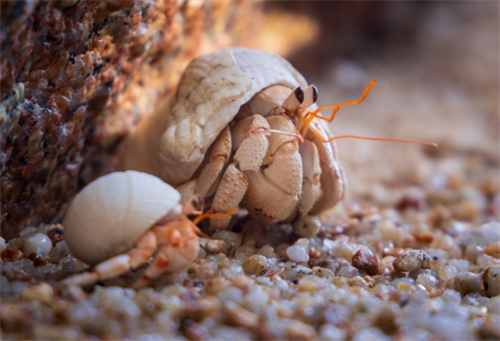
[The picture is from Blue Reef Aquarium,the copyright belongs to the original author]
Hermit crabs are becoming a new star in the pet world. In recent years, they changed from rare pets to common ones. They quickly won the hearts of many pet owners. Their special look and actions are very interesting. The thick shells, thin legs, big claws, and cute, watchful eyes make people want to look longer. Also, compared to normal pets, hermit crabs are very simple to keep. They almost do not need any space.
But, they might seem like good pets, their life in nature is different from life in a tank. If you own a hermit crab, learning about their biology and habits helps you care for them better.
Many people question what hermit crabs are. Are they really "crabs"? In biology, they do belong to the "crab" group. They are part of the Arthropoda phylum, Crustacea subclass, and Malacostraca class. Common hermit crabs are often from the land hermit crab family. They mostly live on land and do not need oxygen from water. Some hermit crab family members live in the ocean and breathe with gills.
The hermit crab's body is between a shrimp and a crab. Their bellies are quite soft. They cannot grow a hard shell like other crabs. So, they must use other shells for safety. Their first four legs became "big hands" for holding shells. This lets them live in many places.
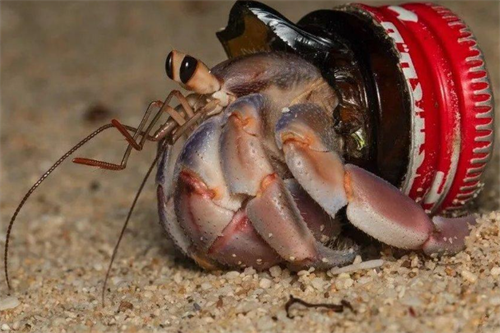
Unlike other crabs, hermit crabs must change shells their whole life. As they get bigger, they look for bigger shells to live in. When shells are rare, they might fight others for shells. They also use trash from other animals as a temporary home.
Habitat
Hermit crabs live in many places, mostly in tropical and subtropical areas worldwide. They can live deep in the ocean, down to 140 meters. They also live in tidal zones, coral reefs, and sandy beaches near the coast. Besides water, some hermit crabs can live on land. But they must stay near water to keep wet. A damp place is very important for them.
Reproduction method
Hermit crabs lay eggs. The females usually have babies two times a year. The breeding time is normally from January to February each year. The females keep the eggs inside their bodies. Then they put the eggs into the sea. The young will float for some weeks as plankton. Then they slowly grow into small hermit crabs.
[The picture is from BBC,the copyright belongs to the original author]
A Guide to Responsible Crab Keeping:
Diet
Hermit crabs eat both plants and meat. They mostly eat scraps. They help clean waste from the sea floor. People call them "marine vacuum cleaners". Their food includes mussels, snails, worms, larvae, plant bits, and other sea invertebrates. They also eat dead soft-bodied animals. They even use these animals' shells as their own homes. Besides picking up sea floor scraps, they also hunt small invertebrates. These include small crustaceans, water snails, and polychaete worms. When food is scarce, they might eat each other. Their diet is not just sea life. Algae and fresh or rotting plant bits are also on their "menu".
For pet hermit crabs, you must give them a balanced diet. It should have many foods like in nature. They need good protein (like seafood, eggs, lean meat), calcium (like cuttlebone, eggshell, coral), fresh fruits and vegetables, and dead leaves and moss (for fiber and good microbes). A poor diet causes health issues. They can get weak outer shells and have trouble molting. They might get sick or die.
Hermit crabs need different food when they molt. Before molting, land hermit crabs eat a lot. They store enough nutrients for the molting process. Protein and calcium are the two most important nutrients. They help molting go well. Also, foods with coconut oil, red palm oil, or olive oil can help hermit crabs molt smoothly. So, before molting, they need to eat foods full of these nutrients, including these oils. After molting, they must keep eating well to get back to normal.
Cylinder block
Hermit crabs need a cozy home. Picking the container is the first step. Common containers are fish tanks, reptile tanks, and storage boxes. Your choice depends on your money and how many hermit crabs you have
Fish tank: A normal fish tank or a very clear one. They look nice and cost a fair price. A tank about 60 centimeters long can hold 3 to 4 hermit crabs. You might also need a filter and a heater.
Reptile tank: This kind of tank looks quite good. It often has a door on the side, making cleaning easy. But it costs more money. It fits people who want a better crab-keeping experience.
Storage box: This is the cheapest choice. It is great for beginners with little money. It may not look pretty, but it works well. It is good for short-term use or for a few hermit crabs.
Humidity and temperature: Keep the humidity between 70% and 90%. Keep the air temperature at 26°C to 28°C. The night temperature can go down to about 21°C.
Padding material
Sand: Sea sand looks very nice. It can make a natural setting. But it is heavy and gets dirty fast, so you must clean it often. You should mix sand with coconut fiber. The mix should be about "more soil, less sand". Sand is pretty but needs more work.
Coconut fiber: Coconut fiber is cheap and easy to care for. It also holds water well. It is very good for helping hermit crabs molt. The coconut fiber layer should be three times thicker than the hermit crab's shell. This gives them enough room to molt comfortably. It may not look very attractive, but it is simple to handle. Many hermit crab owners pick it.
[The picture is from Critter Babies,the copyright belongs to the original author]
Climbing and hiding facilities:
Climbing facilities: Hermit crabs love to climb. You must give them enough things to climb on. You can use natural items like driftwood, branches, and coconut shells. These make a more natural home for them.
Hiding facilities: A hiding spot is also important. Usually, they can find a place to hide by themselves. If the tank has enough climbing things, they will hide in root cracks or under driftwood.
Water quality and salt content:
Sea salt: You must give your hermit crabs some sea salt. You can pick sea salt made for saltwater fish. It gives hermit crabs the salt they need and keeps them healthy.
Water Basin: Hermit crabs need two water bowls. One holds fresh water. The other holds salt water. The salt water bowl should be deeper. This lets the hermit crab soak itself comfortably. The fresh water bowl can be a normal shallow dish. The water in the fresh bowl should not be too deep. This stops the hermit crab from struggling to get in.
When you have all the supplies, the last step is picking the hermit crabs! When you choose them, pick ones that are healthy and active. Their shells should fit their body sizes. Hermit crabs are social animals. You should not keep only one alone. Living in a group makes them more calm. It lowers their stress and makes them happier.
Reference:
[1] https://kilimanjaroshermits.blogspot.com/p/kilimanjaros-guide-to-hermit-crab.html
[2] https://nortonsnest.com/pages/hermit-crab-diet-guide

golden retrievers
Are golden retrievers gentle towards all living creatures?
Many people think Golden Retrievers are friendly and gentle dogs. They are kind to everyone. Even people who are scared of dogs like them.
Siamese Cat
Maintenance Guide for the Mystically Changing-Colored Siamese Cat
A cat's fur can change color. The Siamese cat is the best example of this. Everyone knows a Siamese kitten is born almost all white. I
fish
Some common mistakes made by beginners when raising fish and the correct methods for fishkeeping
Fishkeeping seems simple, but it needs some knowledge and skill. Beginners often make mistakes. These mistakes can hurt the fish and may even kill them.